La Piñata: Hay Más Tiempo Que Vida
Time persists. Life concludes. What we do within it is the only measure.
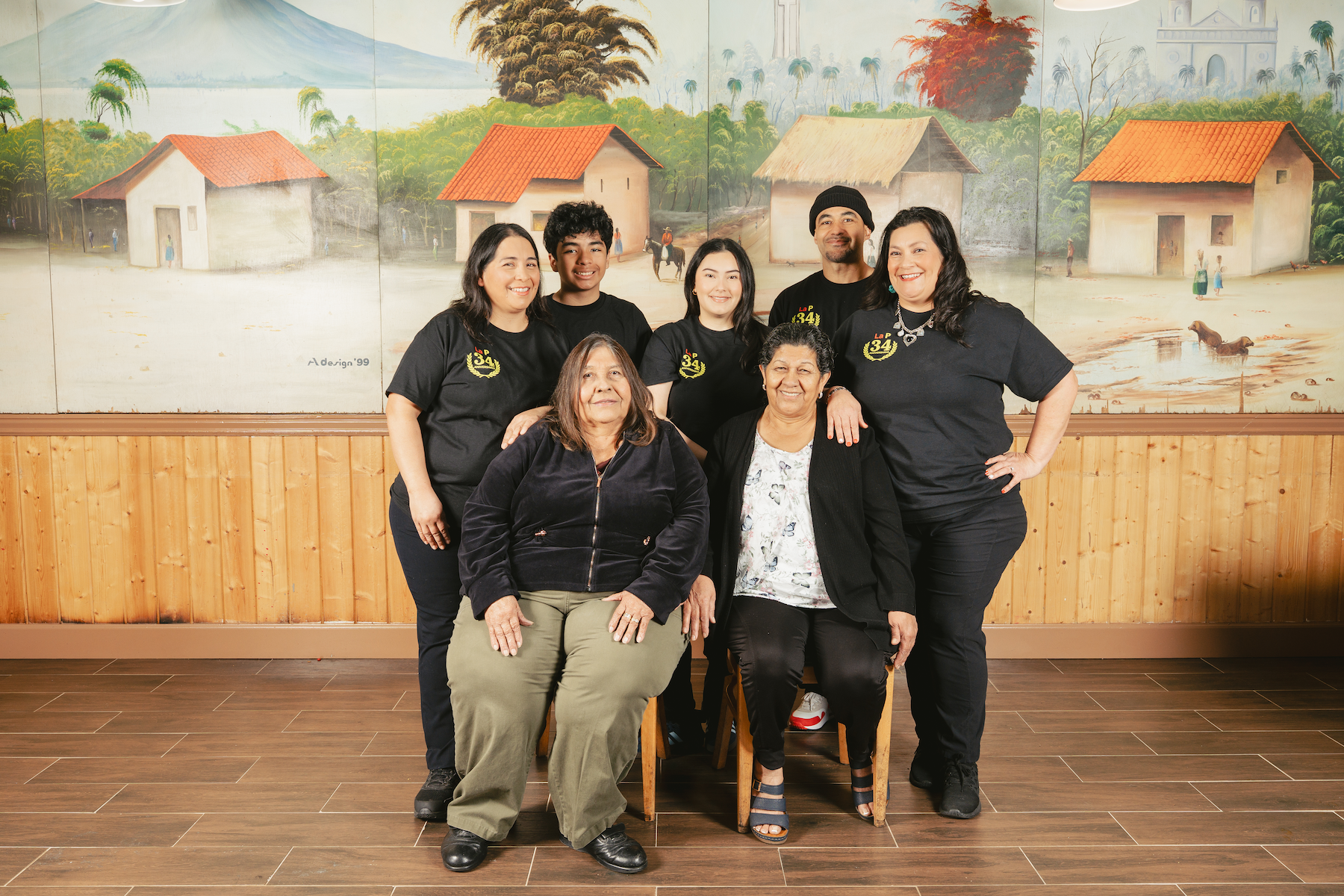
If you ask Lorry Morales to tell you how La Piñata began, she does not start with a lease or a business plan. She starts with a parish.
In the late 1980s and early 1990s, Lorry Morales’ mother, Lucy Castro, was part of a church community in Foster City. Like many parish communities, it ran on food—on what people brought, week after week, without much ceremony. Lucy brought pupusas. She brought other Salvadoran dishes, too, but it was the pupusas people remembered. They began to look for them. Then they began to look for her.
Someone said, almost casually, you should open a restaurant.
At the time, it was less a plan than a suggestion that lingered.
Instead, Lucy began cooking out of the backyard, selling to family friends on weekends, sometimes setting up near the soccer fields scattered across San Mateo, where games brought together entire communities for hours at a time. The food had to be simple, portable, immediate—something you could hold in one hand while watching your child play, something that could travel between conversations. It was not yet a formal business. It was repetition—showing up in the same way, in the same places, often enough that people began to trust what they would find.
The idea of a restaurant arrived later, when the momentum had already been established.
A friend mentioned a space that was available. Lucy went to see it, then asked her former sister-in-law, Rosa Ramirez—Mila to the community—what she thought. Mila agreed. They moved quickly, though not because they were certain. More because, by then, saying yes felt like the only way to find out.
In the winter of 1992, they opened.
For Lorry, the early years of the restaurant are tied less to origin than to routine. She was a freshman at San Mateo High School when her mother and aunt took over the space. The location was close enough that after-school work became an extension of the school day. She and her cousin would come in after class, take their places behind the counter, and do what needed to be done.
The business was slow in those years. Slow enough that she could sit down between customers and finish her homework. Slow enough that the work still felt provisional, something that existed alongside her life rather than structuring it.
Meanwhile, the women who owned the restaurant were operating under a different set of realities.
For five years, the business did not turn a profit. That meant it could not sustain them. So they continued working other jobs—housekeeping, caregiving, whatever paid—and took turns at the restaurant. One would cover a shift while the other worked elsewhere. Then they would switch. It was not a strategy in any formal sense. It was a way of enduring long enough to see if the effort would eventually take hold.
They did not speak about it as sacrifice. They simply kept going.
When Lorry left for college, the restaurant remained, steady and unresolved, something she could return to but did not yet feel defined by. Summers brought her back into the space, back into the familiarity of it, but her life, at that point, was still oriented elsewhere—toward school, toward the possibility of a different future.
What she could not yet see was that the transition had already begun.
It did not happen all at once. It happened in layers, through necessity more than intention, until one moment made it impossible to ignore.
Her mother could no longer work.
Years of physical labor had accumulated in the body in ways that could no longer be managed. Lucy needed knee replacements but had to wait for Medicare before she could receive them. In the meantime, she stepped away from the restaurant.
What disappeared in her absence was not just a role. It was a way of holding the space.
Lucy had been the one who noticed. She noticed when someone hadn’t eaten, when someone was moving too fast through their day, when a moment could be softened without interrupting the work. She would tell them, in passing but with intention:
Hay más tiempo que vida.
There is more time than life.
The translation, Lorry says, never quite captures it. What her mother meant was something closer to this: the work will always be there. There will always be more to do. But life—the part you are meant to experience—is not as abundant as it seems.
So take the time.
Sit down. Eat your meal. Taste it. Pay attention, even briefly, to the small things, because often those small things are what carry you through the rest of the day, especially the difficult ones.
At the time, it might have sounded like a passing comment, something said in the middle of a shift. But it stayed. Decades later, employees who have been with the restaurant for twenty years or more still remember her saying it. They repeat it now with a kind of quiet recognition, as if its meaning only fully revealed itself over time.
When Lucy stepped away, that presence—her way of moving through the room, of shaping it through attention—left with her.
The rhythm changed.
Mila remained, steady and committed as ever, continuing to hold the business in the way she always had. But the balance between them—the particular way their strengths met and supported one another—was no longer the same. The space adjusted. The staff felt the difference, not as something disruptive, but as something that required a new way of working, a new way of relating.
And so, gradually, Lorry stepped in.
At first, she tried to hold two worlds at once—teaching, working, moving between them with the assumption that both could be sustained. But over time, the strain of that arrangement became clear. The restaurant required presence, not just participation. It required someone who could hold its internal logic, its relationships, its tensions.
Eventually, she stopped dividing herself.
She stayed.
What she brought into the space was not a new system, but a continuation of something she had already been shaped by.
Her parents had never framed their work in terms of values, but the values were visible. They worked without complaint. They did not announce their effort. They were consistent. They did what needed to be done, over and over again, until that consistency became the foundation of the business.
These were not lessons that had been taught directly. They were absorbed.
At the restaurant, that absorption became practice.
The language of “family business” is often used loosely, but here it has weight.
The staff operates with a familiarity that resembles a family, but Lorry is careful about how far that analogy extends. There are boundaries she tries to maintain, even as the relationships deepen. People rely on one another. They disagree. They develop informal hierarchies of trust—who can step in, who can steady a situation, who can be counted on when something matters.
Lorry watches those dynamics closely. She knows that care can easily be mistaken for favoritism, and that fairness requires a certain distance. Holding both—closeness and clarity—is part of the work now.
The same is true of the customers.
There are people who come in so regularly that their absence becomes noticeable. Lorry thinks of one woman in particular, who lived just a few doors down and, over the years, made her way through nearly the entire menu. When she eventually told Lorry that she would be moving—still within San Mateo, but far enough that she would not return in the same way—it did not feel like a casual goodbye.
It felt like leaving someone.
What people return for is not easily named because it exists in combination.
The food matters. Much of it is still made from scratch. Some elements are still assembled by hand, processes that require time and attention rather than efficiency. People can taste that.
But there is also something else—a steadiness, a refusal to chase novelty, a sense that what exists here will remain as it is. The menu does not shift to keep up with trends. There is no urgency to reinvent. What was there yesterday is there today.
In a place where so much changes, that kind of consistency becomes its own form of care.
The surrounding neighborhood operates within a similar logic.
From the train station northward, the businesses form a quiet network of continuity—family-run establishments that have persisted through decades of change. La Cumbre, Mi Rancho, Los Primos, the markets and shops that line the street. Many have been there as long as Lorry’s family has, each carrying its own version of the same story: arrival, effort, survival, adaptation.
But the conditions that allowed those stories to unfold are shifting.
Costs are rising. Competition is no longer limited to other storefronts. The question of how long a place can hold its ground is no longer abstract.
And yet, they remain.
For now.
When the restaurant recently closed for renovations—what was meant to be a few days stretched into a full week—the response from the community was immediate. Customers called, again and again, often bypassing the recorded message explaining the closure, wanting instead to hear a voice, to confirm that the place still existed.
The calls were forwarded to a cell phone. Lucy answered them from home.
At some point, someone recognized her.
The voice, and all that it made meaningful, had not changed.
-
When Lorry speaks about the future, she does so without insisting on it.
There are nieces now, another generation, but she does not assume they will take over. She does not place that expectation on them. If they return, it will be because they choose it.
If they do not, that will be its own kind of completion.
When she thinks about the work of generations, she returns to something simple.
A labor of love.
Not as a phrase, but as a reality—work sustained not by certainty, but by care. Work that becomes part of you, that shapes your days, that asks for more than it gives and still feels necessary.
Like something you raise.
And in the raising, something that quietly teaches you how to live.